
![[Valid RSS]](valid-rss.png "Validate my RSS feed")





Topic: mobile learning
Podcast: Smartphones in E-Learning  My Podcast
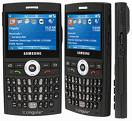
By now, everyone is familiar with the attributes of the iPhone, but what about the smartphones? Let’s look at the Blackberry, the Blackjack, the T-Mobile Sidekick, Samsung, and others. With the ability to download, store, and play mp3 files, video files, and images, the competition has heated up. Smartphones are starting to have the functionality of handheld devices such as the Dell Axim.
New infrastructure and information architectures make downloading largerfiles and sending movies / images possible. Here are a few innovations around the corner:
- HSUPA: High Speed Uplink Packet Access. 1.5 Mbps up to 5.76 Mbps
- HSDPA: High Speed Downlink Packet Access, with 3 Mbps up to 14.4 Mbps.
This is an improvement over the current method, WCDMA (Wideband Code Division Multiple Access) because it will be fully 5 times the speed of WCDMA.
Future possibilities include:
- Delivery of Instructional Content to Massive Multi-User Groups
- Uniform, low cost, highly effective test preparation
- Virtual study groups
- Multi-user webinars via Elluminate or other conferencing software
- Synchronous professional development using polling and interactivity
- Asynchronous training and development.
Susan Smith Nash, Ph.D.
visit E-Learning Queen: http://elearnqueen.blogspot.com
